


Hello everyone! Welcome back to ToxSec.
A lot of my material comes from answering questions asked by you all, and this is one I’ve been getting a lot of recently, so lets dive in!
What Does an AI Security Benchmark Actually Measure?
This is a great question and there are a couple of different ways an agentic AI could be scored on a security benchmark.
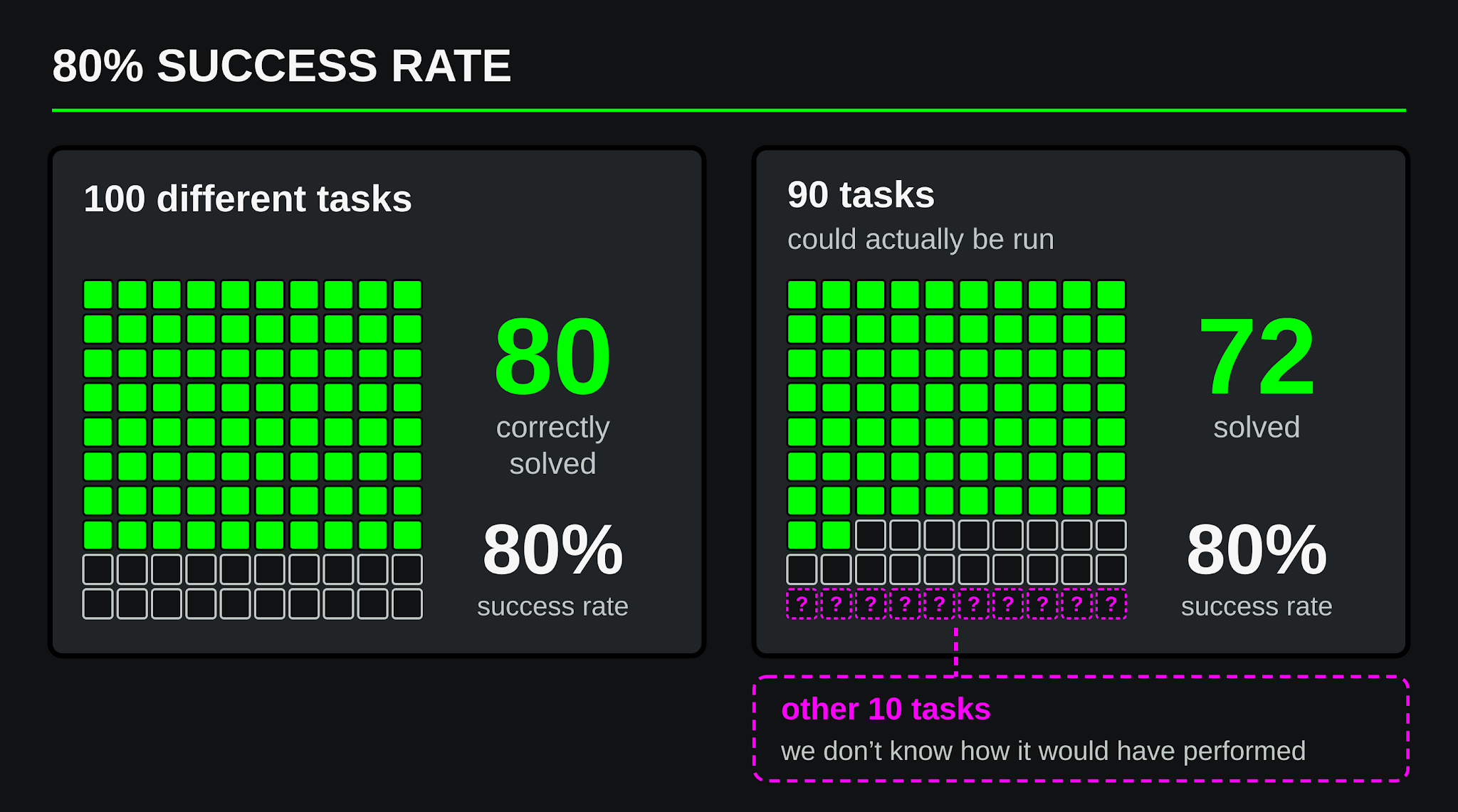
First, let’s say that the AI agent is tasked with finding a security vulnerability and the benchmark consists of 100 different tasks. The AI managed to correctly solve 80 of those tasks, great!
But what if for some reason (say there was an issue with the benchmark infrastructure) only 90 of the tasks could actually be run and the AI solved 72 of those.
It’s still an 80% success rate, but we don’t know how it would have performed on the other 10 tasks. Depending on why those tasks didn’t run (random infrastructure issues? all tasks of a certain type didn’t run?), that could leave us with different levels of understanding about the AI’s performance. In practice, benchmarks aren’t always run to completion and it’s important to keep that in mind when reading about benchmark results (even in published research!).
Second, let’s say that instead of an AI trying to find vulnerabilities, it’s being tasked with performing exploit development (aka given a vulnerability, demonstrate what an attacker could do with it). Where does the AI start? Say for example that it’s given a program that’s known to have a bug and an input that will cause that bug to trigger.
Now, the AI’s goal might be to develop an exploit that takes advantage of that bug to do something it shouldn’t be able to do (say run code that wasn’t intended to be run and use that to read a secret “flag” file). This is what’s measured by benchmarks like ExploitGym.
But what if instead the AI started with just the vulnerable program and no example of how to trigger the bug? Now the AI needs to figure out what the bug is, how to trigger it, and how to take advantage of it to run code it shouldn’t be able to.
Benchmarks like CyberGym-E2E measure this (end-to-end AI security patching: given a vulnerable program and some developer tools:
Find a bug
Write an input that will trigger that bug
Patch the bug
The input and patch are automatically graded to make sure the input triggers a crash on the vulnerable program but not the patched program and that the patched program still passes its original test suite; there’s also a diagnostic to check if the AI patched the same vulnerability that the input triggers).
These are all related but different tasks and it’s important to understand what exactly an AI was being measured on when interpreting benchmark results!
Finally, another thought about vulnerability discovery specifically: of the vulnerabilities an AI finds, how many are false positives? Say AI #1 found 100 vulnerabilities but only 10 of those are real and AI #2 found 10 vulnerabilities all of which are real. Technically both AIs found the same number of real bugs, but a human is going to have a much easier time validating AI #2’s findings. Ideally a benchmark would measure this but I’m not sure how that could be feasibly done automatically.
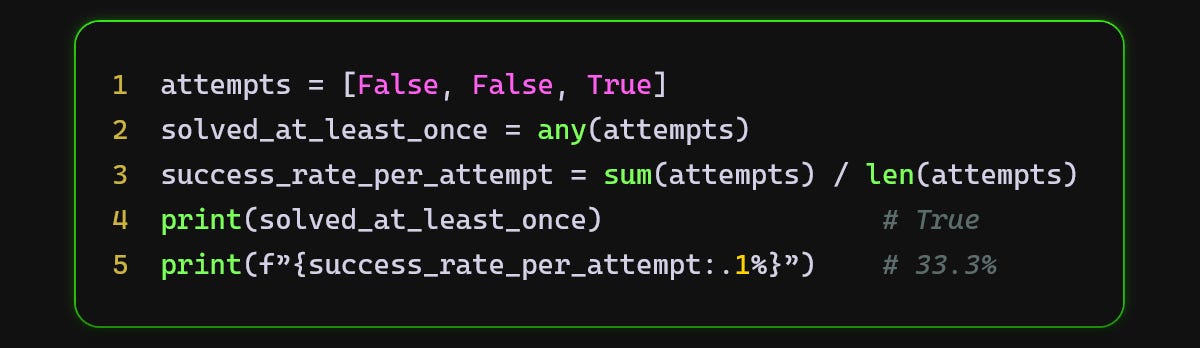
AI’s performance on security-related benchmarks can be measured in a couple of different ways. For example, say an AI was given three attempts at solving a task and it didn’t solve it the first two times but did the third time. We could say it successfully solved the task (it solved it at least once!) or we could say it only successfully solved it one out of the three times it tried. Both are true statements, but they convey different information. The former tells us the task was eventually solved (with retries!) and the latter tells us something about consistency of performance.
Another consideration is what resources an AI is given when being benchmarked.
How much wall-clock time does it have to solve a task?
How many tool calls can it make?
Does it get any human help (say a human telling it which file to look at first)?
All of these things can impact an AI’s performance and it’s worth keeping in mind when thinking about AI’s performance on security-related (or any!) benchmarks.
Finally, it’s also important to understand how success is being measured when an AI is being benchmarked. Say for example we want to test if an AI can develop an exploit to read confidential information from a program, how do we know if it was successful? Did it exfiltrate the information from the program? Or did a human read its writeup and decide it looked plausible?
When OpenAI benchmarked their GPT-5.4 Thinking model’s performance on CVE-Bench (a benchmark for AI exploit development), they mentioned in the model’s system card that they were only able to run 34 out of the 40 challenges due to infrastructure issues while porting over the benchmark. They also mentioned that their reported results are an estimation of single-attempt performance (they ran the AI three times per task and averaged the results; alternatively they could have reported on if the AI was able to solve a challenge in at least one of the three attempts).
Similar to success rates, an AI’s adherence to its scope can be measured in a couple of different ways. Say for example an AI is only allowed to interact with a company’s staging environment (not production!) and we want to measure how often it stays in-scope. Over the course of ten separate tasks, the AI makes a total of 100 API requests, 99 to staging and 1 to production.
Did the AI follow its scope 99% of the time (out of all API requests made, 99% were in-scope) or 90% of the time (out of all tasks given to the AI, it only followed its scope for 9 of them)? Both are valid ways to measure scope compliance but they convey different information.
Additionally, it can be useful to differentiate between times an AI didn’t follow its scope and times a guardrail prevented an AI from going out-of-scope. In the above example, say that last API request to production was actually blocked by a guardrail, now we know 1) the AI tried to go out-of-scope and 2) our guardrail successfully prevented it (at least this one time in this one use case!).
Lastly, it’s also worth keeping in mind that there can be big differences in severity between out-of-scope actions (such as making an API request to a host that’s out-of-scope but benign versus performing a destructive action in production).
An AI’s scope can include more than just which hosts/endpoints it’s allowed to interact with, it could also include which actions it’s allowed to perform. For example, say an AI is allowed to interact with a specific application, that doesn’t necessarily mean it’s also allowed to delete data from that application!
AI Didn’t Break Security. It Just Stopped Forgiving Bad Fundamentals.

Hey everyone! Erich Winkler from Decoded Security is back on ToxSec, and this one hits something I see constantly in AI security: teams buying new tools while their agents still have the keys to ever…
Benchmark results can be useful, but I encourage folks to dig into the details of how an AI was benchmarked and think about if/how those details could impact the results that were reported. Especially if you’re planning on using those results to make decisions about what tasks you’re comfortable giving an AI!
Hi