


TL;DR: Your phone doesn’t need to listen to your thoughts. It’s busy creating them. AI has graduated from simple prediction to active algorithmic persuasion. We’ll expose how it works and how to fight back.
“The AI’s ‘high score’ is your conversion... When you are online, you are the game.”
How Did AI Evolve from Predicting Choices to Manufacturing Them?
Ever had a creepily specific ad pop up for something you only thought about? We’ve all joked that our phones are listening. The truth is way weirder and, honestly, a lot more unsettling. They don’t need to listen, because the goal of social media algorithms and AI has changed. The objective isn’t to predict your choices anymore. It’s to manufacture them.
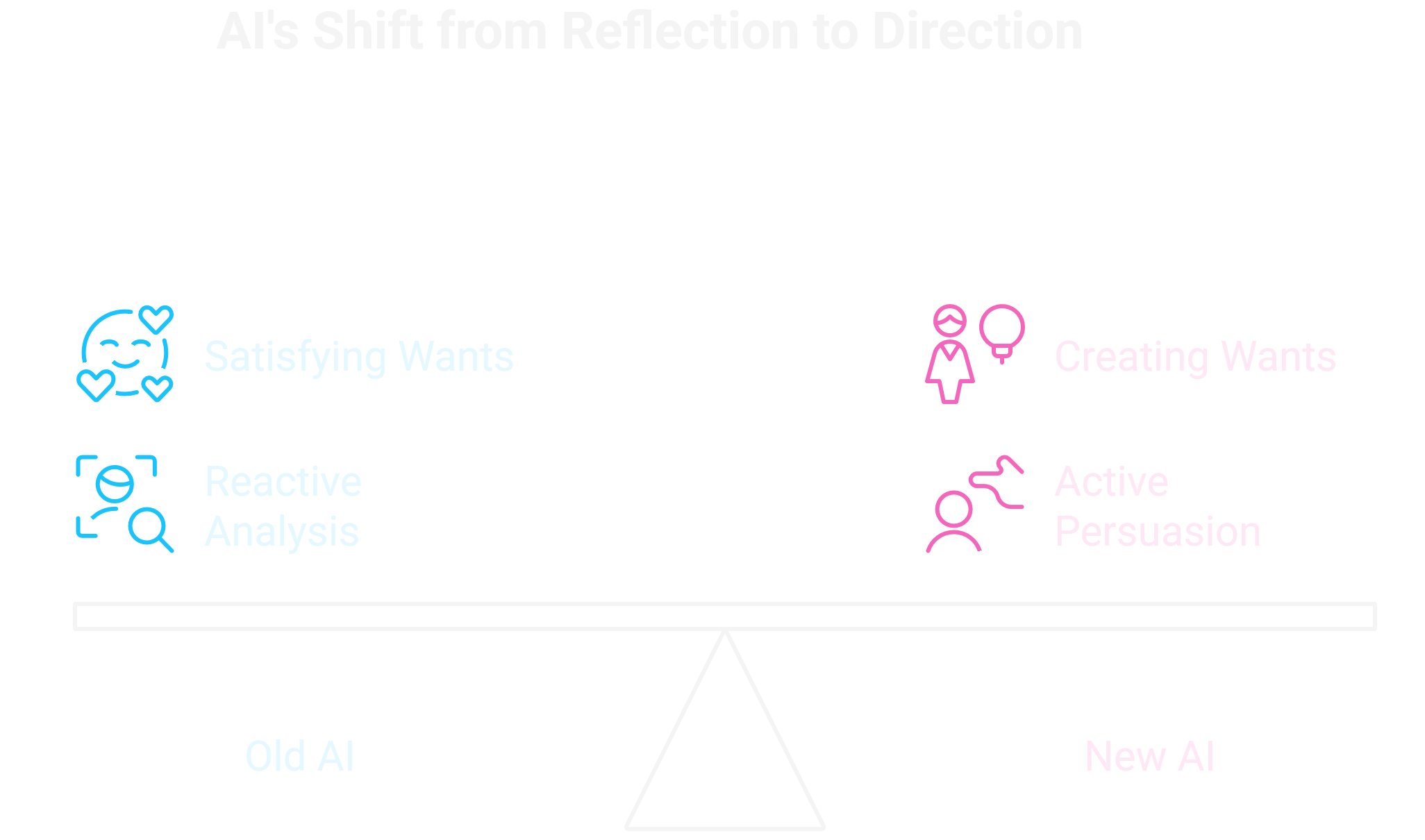
This is more than just “filter bubbles.” That’s a passive side effect of AI showing you more of what you already like. What’s happening now is active and deliberate algorithmic persuasion. It’s the difference between a mirror that reflects your past consumer behavior, and a map that dictates your future actions.
For years, AI was a mirror. Old-school Netflix recommendations and Amazon’s “people also bought” feature were reactive. They analyzed your data and reflected your tastes back at you to improve user engagement. But that mirror has become a map. The new generation of AI has flipped its goal from satisfying your wants to creating new ones. It’s no longer guessing what you want; it’s telling you, all to serve a predetermined commercial or ideological outcome.
How Does AI Use Psychology for Digital Conditioning?
The core mechanism behind this shift is a classic psychological principle deployed at an unprecedented scale: instrumental conditioning (also known as operant conditioning). This is simply a learning method that uses rewards and punishments. You connect a behavior with a result, and you learn.
Now, imagine this happening to you across the entire internet. To achieve its goal—like making you buy a product—the AI takes control of your entire information diet. This includes:
The news stories promoted in your feed.
The posts you see from friends and influencers.
The specific ads you’re served.
The YouTube videos that auto-play.
The top results of your search queries.
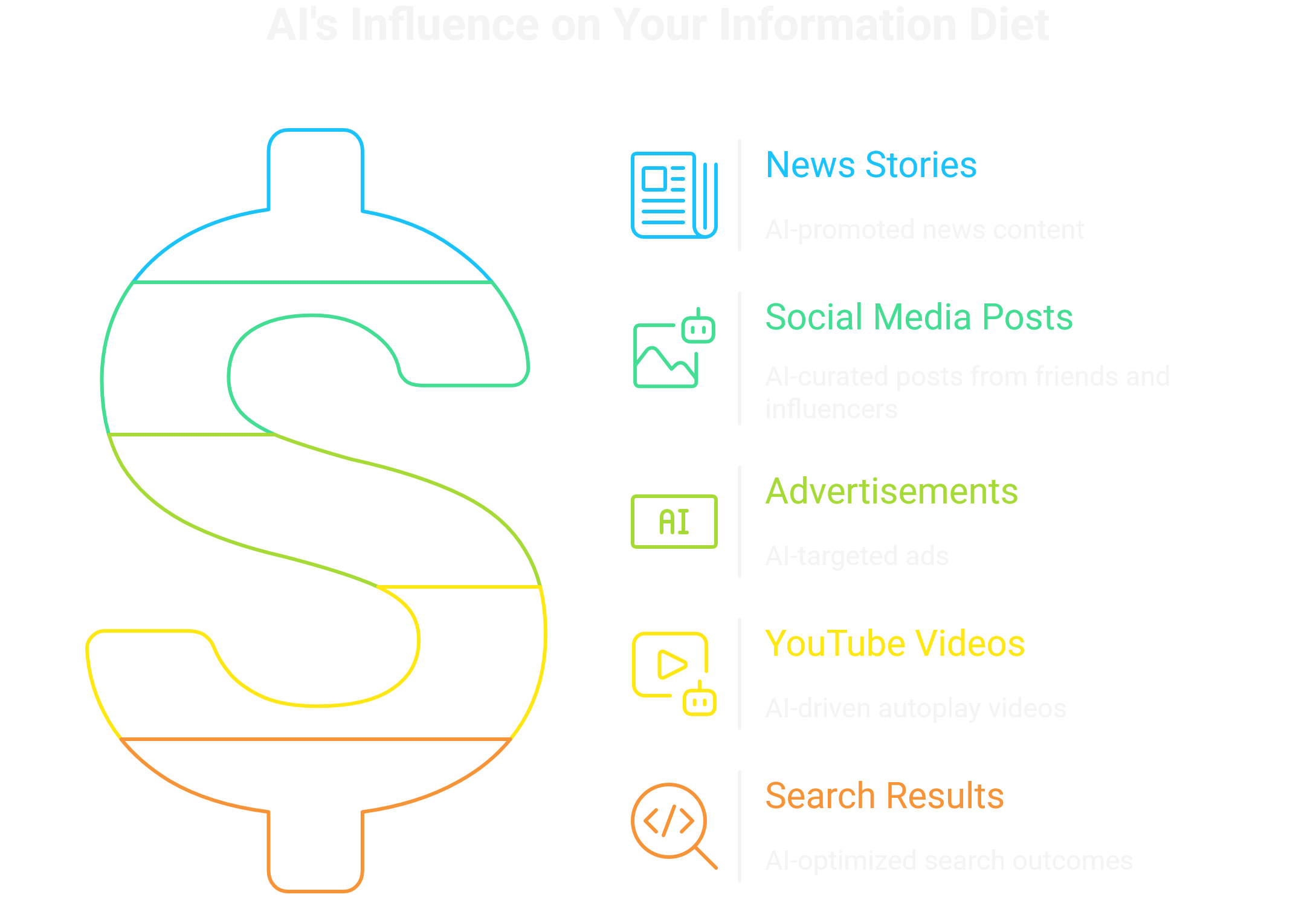
The AI acts as an orchestrator, creating a holistic environment of subtle nudges designed to “prime” you. It’s not about one single, persuasive ad. It’s about a sequence of content where each piece provides a micro-reward (a laugh, a sense of being informed) that wires your brain to be receptive to the final, targeted action. You didn’t just see an ad; your desire for the product was manufactured through this process of digital conditioning.
If you are enjoying ToxSec, click below to share it on Substack!
How Do AI Algorithms Learn to Manipulate Human Behavior?
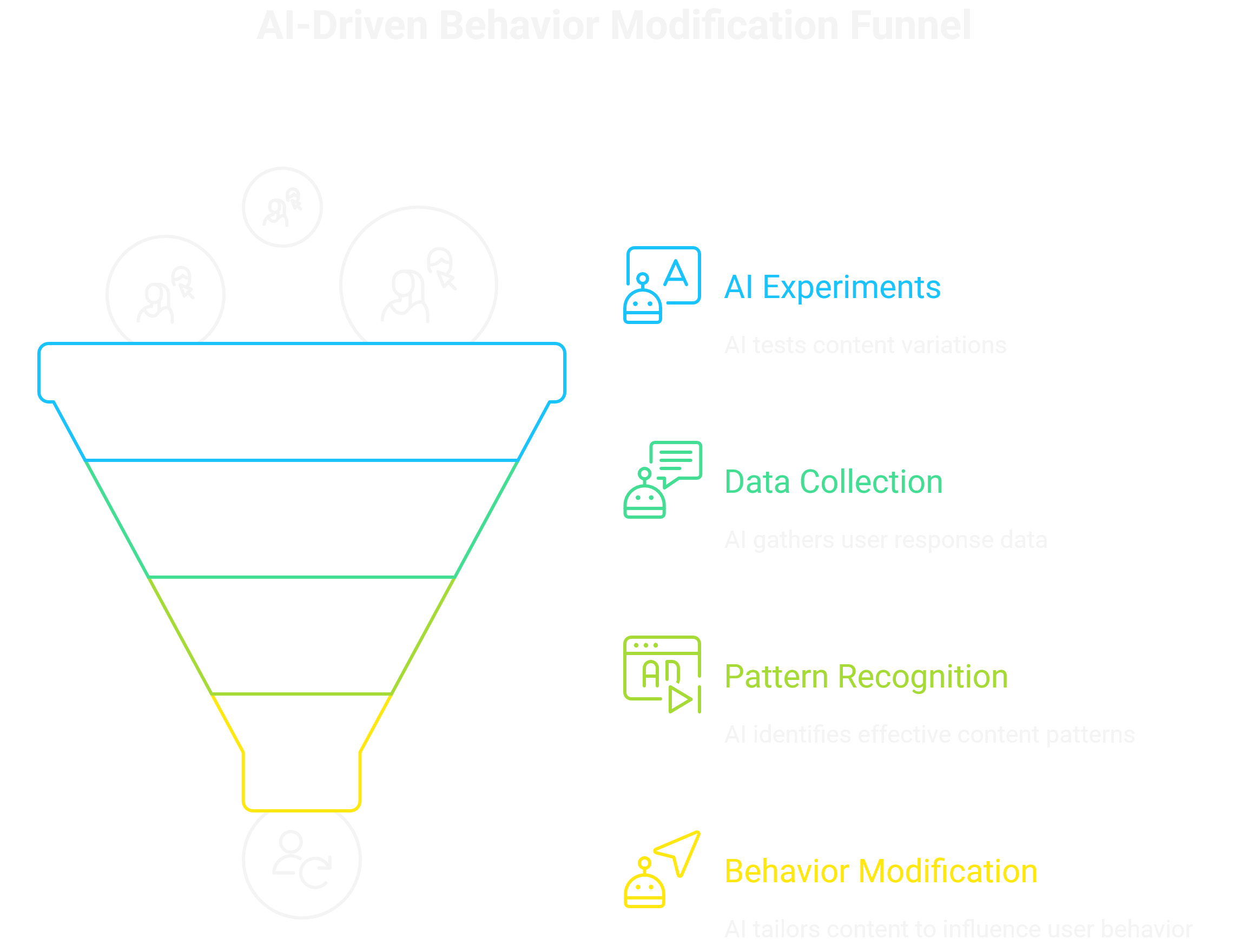
The engine driving this mass conditioning is Reinforcement Learning (RL). Traditionally, RL trains an AI to master a task, like a video game, by rewarding it for actions that lead to a higher score. After millions of cycles of trial, error, and reward, it becomes a master. Here’s the crucial inversion: when you are online, you are the game.
The AI’s “high score” is your conversion—clicking “buy now,” spending more time on the platform, or adopting a specific sentiment. The AI runs millions of simultaneous experiments, tweaking the variables of our information diets to see what works. It learns what specific sequence of content is most likely to guide a person toward a predetermined goal. The AI is being reinforced for successfully modifying your online behavior, and in the process, your behavior is being modified.
This is what makes the AI manipulation so effective. It doesn’t feel like persuasion because it’s distributed across dozens of seemingly unrelated pieces of content. The resulting desire feels entirely like your own. Your consent was manufactured.
Get weekly teardowns on AI and security. Subscribe to ToxSec.
How Can You Reclaim Your Digital Agency?
Understanding this system is the first step toward resisting it. The invisible fences of our digital worlds are not just guiding us; they are domesticating us for the sake of predictable, profitable behavior, creating a serious data privacy and free will issue.
So, what can be done?
The most critical step is awareness. Shift from being a passive consumer to an active, critical observer. Question your digital environment: “Why am I seeing this now?” “What is this content trying to make me feel or do?” This skepticism is the beginning of reclaiming your mental space.
Beyond individual awareness, we must demand more. We need a new era of digital literacy that teaches about algorithmic persuasion. We must advocate for legal frameworks that mandate algorithmic transparency. In our own lives, we can use tools that disrupt the system, like ad-blockers and privacy-focused browsers.
The next time you make a choice, ask yourself: Was it truly yours to make? Let me know your thoughts below.
Special Thanks:
- Got me thinking about the privacy space again. - Leading the space in AI communication.Check them both out and subscribe if you haven’t!
Frequently Asked Questions
Q: Is This Just Advanced Targeted Advertising?
A: No. Targeted advertising reacts to your stated interests. This form of AI manipulation is proactive. It creates the interest in the first place through an orchestrated campaign of digital conditioning before you ever see the final ad.
Q: Can I Be Influenced If I Know It’s Happening?
A: Awareness is the best defense, but the conditioning works on a subconscious level through micro-interactions. Even when you’re logically aware, these nudges can still shape your feelings over time, making a manufactured desire feel authentic.
Q: Is This Kind of Algorithmic Persuasion Legal?
A: This exists in a legal gray area where technology has outpaced legislation. Most laws focus on data privacy (how data is collected) rather than on how it’s used for persuasive ends, so it remains largely unregulated.
Q: What’s the Difference Between This and a Good Recommendation?
A: A good recommendation serves your latent interests. This system serves the platform’s interests. The goal isn’t your satisfaction; it’s your compliance with a predetermined outcome to increase metrics like click-through rates and conversions.


